Prairie Life

As many of us, I read a lot in school and some of my early favorites were about rural life. I started in early grade school with illustrated large full page books. Cows and horses with red barns and lots of square hay bales. Often a windmill if the page was long enough.

There weren’t any books or pages that mentioned the monetary pressures to large or small farms. The image was bucolic and drew me in to what seemed akin to the first garden of all. The early photos of the whole family, arrayed on the steps of a grey boarded farmhouse with a field at the edge of the photo. The size of the families was arresting to me. Ten or twelve young children and grandparents in the rockers. The newer farm photos had JD 8N’s or Farmall C’s casually parked close that one could run out, leap on over the massive differential and eventually get it started.

The homestead stories around here are told at local eateries and town parades by an old timer standing nearby: “ I’ve seen you around, live nearby?” I answer the size, location and my last name (along with how many decades living there. A short conversation can start. My last name is Scandinavian and several farms are run by them. It appeared I was accepted as normal.

A young man living with us was helping with our repair shop and a close neighbor mentioned He had an old Chalmers C gleaner that needed work. We filled up the gigantic tires and it was close by and easy to drive over. The beaters for grain were wood and the chains driving them looked worse for wear. Not wood.

We got the old thing running and there was promise. Tilling with loaned JD 2520 and then had spreading Heritage wheat, we waited for rain. The crop was not bodacious but with another field nearby from the gleaners owner, we had enough wheat to farrow and store. Hand flipping the grain to get what the shakers let through. It made terrific bread.

I sat in the cab while it was running and all I could see was the field under me. No thanks, It felt tipsy to say the least. Farming at the basic 1940’s level. It worked. We have a small barn with Wilber the talking horse style stall and we had a few horses. Had is the operative word. A reasonable pasture next to the driveway and we were in. Horses got sold, pasture and fence are overgrown and the wheat field is empty and lumpy from Incorrect plowing.

The Gleaner is parked back at the neighbors along with the Ford 8N but our half century farmstead still stands. Our youngest son owns a new Kabota Tractor and does everything around here that needs a strong and talented hand. Carpentry to mowing and tilling the fabulous garden with 14 foot fence to eliminate deer after hours shopping for flowering food. I do what I can with the fire wood and garden and sit on the porch swing and listen to the Kabota mowing trails.
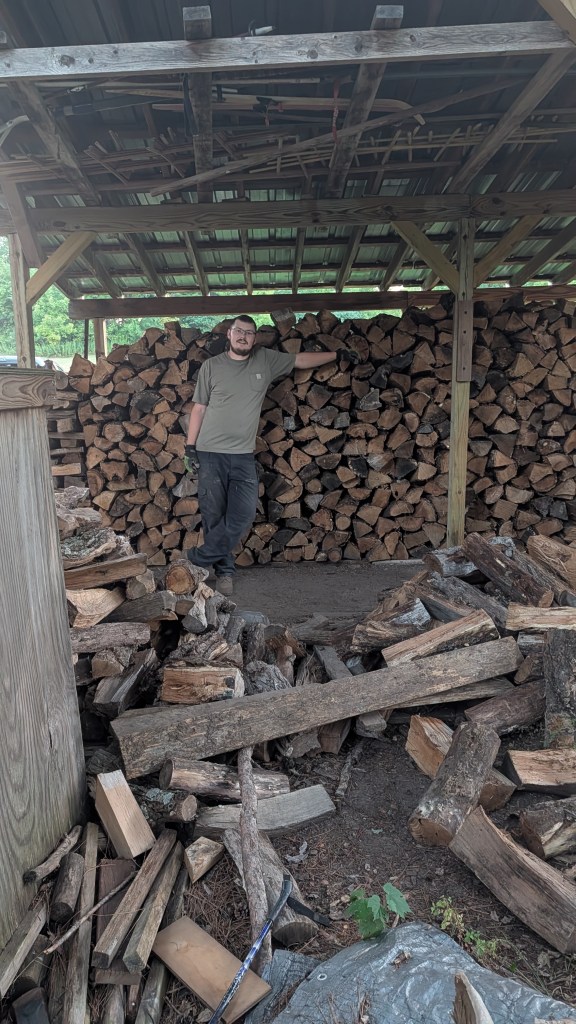
I can see the garden close by and I thank God for this gift of family and Land to live on.

It’s as good as it gets. Jack Photo of our son, Soren in the woodshed

Silo

On my way down the local 2 lane, I started counting barns and old farms. A way to stay alert besides scanning for deer with my fog lights on for extra vision on the shoulder. I had already noticed most barns had all equipment of a dairy operation, but no lights on for early morning milking, no bulk trucks and a silo cuddled up to the barn. The blue Harvestore silos looked fresh and functional. Most of the rest of them had no caps often the barns were at their service life end.

I remember the past time when I visited a neighbors dairy farm and was asked to shovel silage to the cows. It was either that or start hooking up the Delaval milkers. Some of the farmers showed me how to hand milk. “Just hold her up higher with your closed hand and squeeze gently from the top down.” Splash splash into the stainless bucket. Wow.

Mostly, when I shoveled the silage from the convenient opening in the barn, I liked the smell of it. Almost tasty like a good granola smelled. Rich and nutritious and sweet. I asked a few questions about the ease of loading the wheel barrow in the barn and how silage was made and how did it come out of the opening in the wall. Silos, snugged up to the barn and filled with crops grown during the summers. I didn’t taste the silage.

I saw the cycle of dairy farming that made sense. Some of them even made cheese. The milk house vat was scooped for breakfast coffee or baking. It was good and special to me. Daylight was breaking and after we finished and let the cows out to pasture, it was time for that coffee and pancakes. I felt like I was experiencing farming and did not stick around for the planting, tilling, praying for rain and the harvesting.

Hard work, many hours of it and a connection to the land that was comforting and astonishing for a city transplant. I respected my neighbor and understood his life.

I was a railroad track worker and knew hard work but I was working for someone else for wages and there were only wooden ties, spikes, fish plates and ballast to go around for 8 or 10 hours. A city job with commuting in my old 41 Ford. I miss it in some ways, mostly the wing windows when it was summer. I am sure air conditioning was in the works for cars but expensive as a choice. I was used to sweat and my old farm house had good screen windows too.

Now, fifty years later, I look at that old dairy farm as I drive by and the silo is empty, there are no cows getting muddy at the pond and the house chimney has a little pipe sticking out of it for the propane furnace. There are no lights visible in the small barn windows either.

A gigantic green tractor with all the implements scattered around is warming up and getting ready for work. Field work. There are gravity corn boxes and big corn cribs but no bulk trucks backed up to the barn.

Hundreds of acres of corn and soybean fields surround the old farm and all that vegetation gets trucked to a buyer nearby, usually called a dairy. No cows there either, just huge corn cribs and drive through scales for the trucks filled with glowing kernels of corn.

I feel the world has changed and it isn’t neighbors farming. They are cropping for money and not getting much pay for their labor after buying more land and very expensive equipment. A lot of older people I chat with notice this change in rural life too.

Everyone in the township works hard and some of them move south after they feel their work is done. Good beer and restaurant food and relaxation comes with the cost of leisure. Cruise boats are not Glastron fishing boats at the local lake. Fast food and leisure engenders visits to the clothing big box stores. The patio parties and ocean views do not have neighborhood charm. The good old days are replaced by the sirens call from the Odyssey of Homer.

It’s pretty good, Norman Peterson / Jack Gator